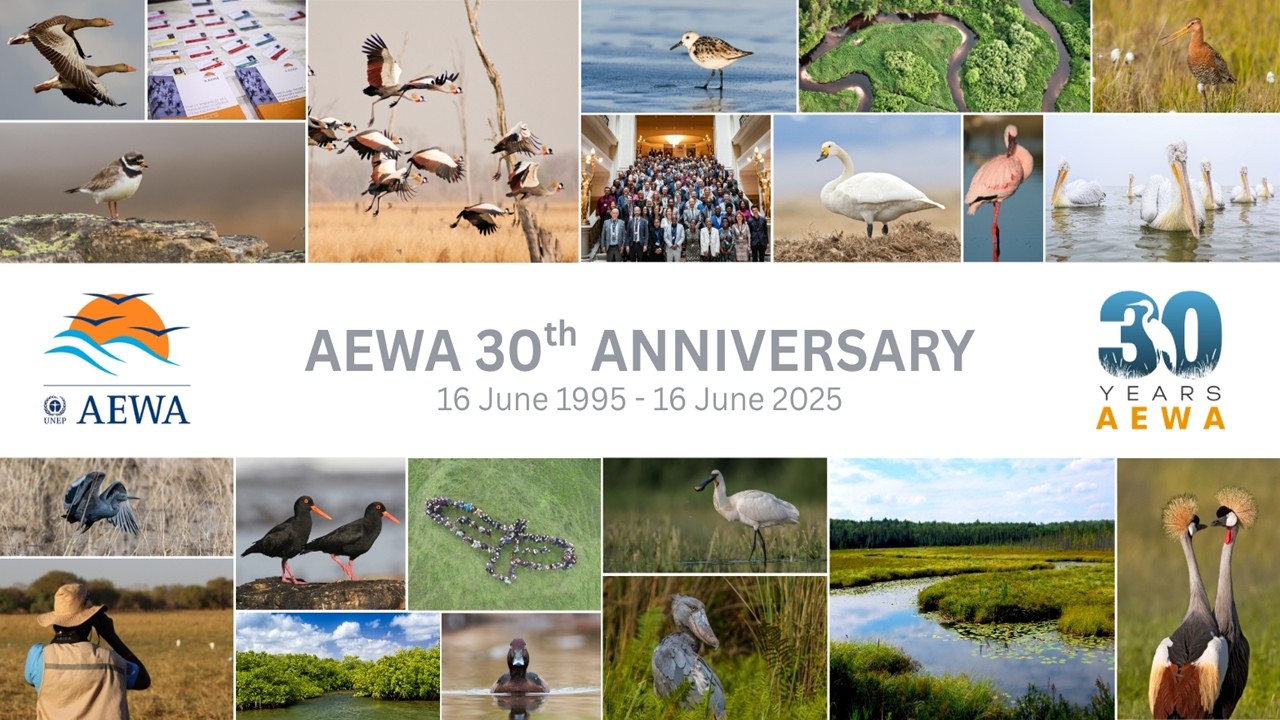
30 Year’s of AEWA: A Moment of Reflection and Celebration of International Waterbird Conservation at AEWA MOP9
AEWA MOP9 Web Coverage for: Tuesday (11 Nov) | Wednesday (12 Nov) | Thursday (13 Nov) | Friday (14 Nov)
| 30th Anniversary Event at MOP9 (11 Nov)
Bonn, 11 November 2025 – As the final agenda item of the opening day of the 9th Meeting of the Parties (MOP9) to the Agreement on the Conservation of African-Eurasian Migratory Waterbirds (AEWA), the AEWA Secretariat organized a special event to mark the 30th Anniversary of AEWA.
“The anniversary event at MOP9 provided an opportunity not only to celebrate achievements under the treaty, but also to reflect on the lessons learned and to remind our delegates of the work still to be done,” said Jacques Trouvilliez, Executive Secretary of AEWA.

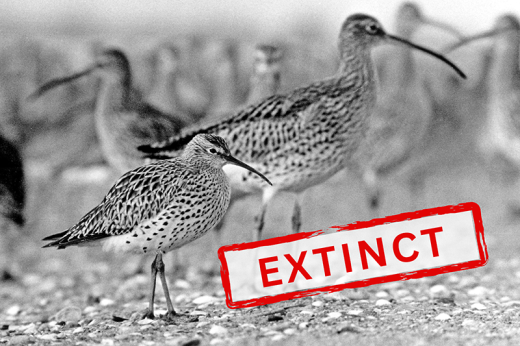
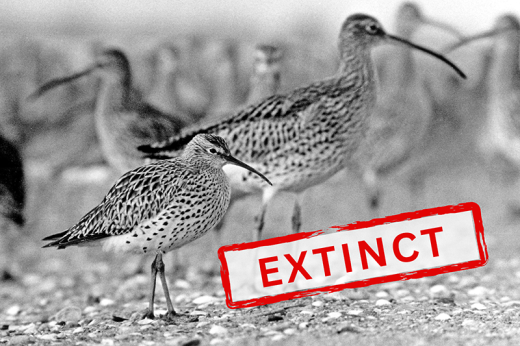
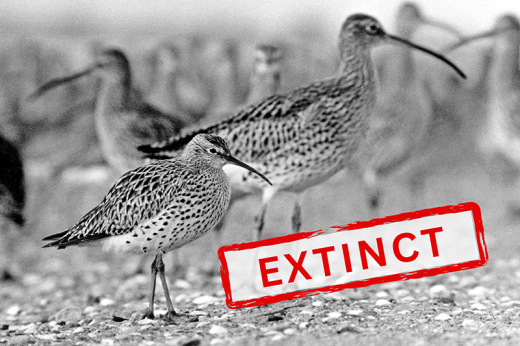
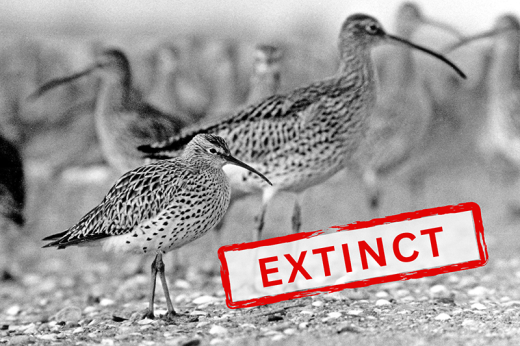
Intended as a moment of reflection, the AEWA Secretariat started the special anniversary session with the unveiling of a taxidermy of the now-extinct Slender-billed Curlew (Numenius tenuirostris) – on loan from Museum Koenig, the Natural History Museum of Bonn – inside the plenary room of the intergovernmental meeting held from 11-14 November at the United Nations premises in Bonn, Germany.
Declared as extinct by the IUCN on 10 October 2025, the Slender-billed Curlew is the first AEWA-listed species to be officially classified as extinct.
“For the Slender-billed Curlew – AEWA simply came too late. Its extinction is a sobering reminder of what is at stake for the remaining 254 species of migratory waterbirds listed under the Agreement,” said Trouvilliez. “The last confirmed sighting of the Slender-billed Curlew was in Morocco on 2 February 1995. This was just four months before AEWA was formally adopted in The Hague on 16 June 1995,” he said.

AEWA 30th Anniversary Event at MOP9 on 11 November 2025 at the UN Campus in Bonn, Germany / Photo by Aydin Bahramlouian (CC BY-NC 4.0)
The anniversary event at MOP9 featured four keynote speakers, each highlighting a different facet of AEWA’s story: from lessons of loss and extinction, to stories of renewal and community engagement, persistence and successful international collaboration.
The Bird with No Story – A Tribute for the Slender-billed Curlew
 Author, producer and a passionate advocate for nature conservation Mary Colwell opened the anniversary session with a moving presentation entitled “The Bird with No Story.” After playing a recording of its call, she spoke about the extinction of the Slender-billed Curlew and what it revealed about humanity’s relationship with nature. In her speech to delegates at MOP9, Colwell suggested that the species disappeared not only because of habitat loss but because its story was never really told. “No one knew about it, so no one cared,” she said, highlighting that extinction is not just a biological event, but a communication failure as well.
Emphasizing that “humanity needs stories to engage hearts and minds,” Colwell called for better storytelling, education, and the use of powerful imagery to play a stronger role in conservation, noting how a single image of a polar bear on melting ice can communicate more than a graph of CO₂ emissions.
Using the occasion of the 9th Meeting of the Parties and the 30th Anniversary Event at MOP9, the AEWA Secretariat then unveiled a new feature on the AEWA website dedicated to the Slender-billed Curlew. The special web feature brings together testimonies from those who last saw the species in the wild, as well as from individuals who devoted years of effort to searching for the remaining birds. Conceived as a living memorial, the feature aims to preserve these personal accounts while inspiring future generations and supporting AEWA’s ongoing communication and conservation efforts.
Crane Custodians and Community Action for Cranes in Africa
The second speaker of AEWA’s 30th Anniversary Event at MOP9 was Kerryn Morrison, Coordinator of AEWA’s International Working Group for the International Single Species Action Plan (ISSAP) for the Grey Crowned Crane (Balearica regulorum). She used her anniversary keynote at MOP9 to share the conservation successes achieved under the plan and highlighted how the framework provided by AEWA’s action plan helps to give both legitimacy and funding leverage for the work she was doing to mobilize communities to conserve the Grey Crowned Crane in Africa.
“AEWA’s 30th anniversary stands as a defining milestone in the global effort to safeguard Africa’s wetlands and their emblematic species - the Grey Crowned Crane. These majestic birds are not only ambassadors for wetland conservation but also for sustainable agricultural landscapes,” said Morrison.
Once abundant, Grey Crowned Crane populations have suffered a dramatic decline of over 80 per cent between 1990 and 2015, leaving only an estimated 30,000–37,000 individuals left in the wild today. Spread across 15 countries in Eastern and Southern Africa, their survival is threatened by wetland loss driven by agricultural expansion, unsustainable farming practices, poisoning, collisions and electrocutions with power lines, and illegal captive trade. In her presentation, she outlined strategies that have made a difference, from taking an active partnership approach involving a range of stakeholders, to improving wetlands management and engaging local people through an integrated approach as “crane custodians.”
Tackling Lead Poisoning for Birds and People
The third keynote speaker at AEWA’s 30th Anniversary Event was Ruth Cromie, who has been one of AEWA’s strongest scientific voices and an active member of the AEWA Technical Committee. Her pioneering work on One Health solutions for issues such as lead ammunition and avian influenza has been instrumental in helping to shape EU and international policy on these topics. 
In her presentation at MOP9, she traced the history of lead ammunition’s devastating effects on waterbirds and people and the steps that led to the historic decision by the EU to ban the use of lead shot for hunting in wetlands in 2020. She also highlighted the example of Denmark, which banned all lead shot in 1996 and banned lead centrefire bullets in 2024.
Yet, Cromie warned, the battle is not over. “There is no safe level of lead,” she said to delegates attending MOP9, highlighting that contamination continues in terrestrial ecosystems and even affects people through consumption of lead-contaminated game meat. Her presentation underscored how AEWA and its partners have turned scientific evidence into policy change, proving that persistence and collaboration can lead to real change on the ground.
AEWA’s Two Honorary Patrons: David Stroud and Gerard C. Boere
The event concluded with reflections from David Stroud, [transcript | video] AEWA’s Honorary Patron, who was also speaking on behalf of AEWA’s other Honorary Patron, Gerard C. Boere. 
In his keynote, Stroud traced the Agreement’s development from its early roots in the 1970s environmental movement to today’s global network of conservation partners. Stroud highlighted milestones including the Wings Over Wetlands project, the Critical Sites Network Tool and the Global Flyways Conference – Waterbirds Around the World, held in Edinburgh in 2004. Over 30 years, AEWA has expanded its reach, both geographically and taxonomically, to include an ever-wider range of migratory waterbird species.
While celebrating achievements, Stroud cautioned that many waterbird populations continue to decline, and that AEWA’s founding principles of cooperation, science-based action and community engagement are more vital than ever. “The spirit that gave birth to AEWA must continue to guide us,” he said.

David Stroud, Honorary Patron of AEWA receiving the 30th Anniversary of AEWA United Nations Endangered Species Stamps from Jacques Trouvilliez, Executive Secretary of AEWA, during the first day of MOP9 in Bonn, Germany / Photo by Aydin Bahramlouian (CC BY-NC 4.0)
In recognition of their decades of service and leadership, and to mark the 30th Anniversary of the Agreement, AEWA’s two Honorary Patrons were honoured with the UN Endangered Species Stamp Series featuring three endangered AEWA species (the African Penguin, the Grey Crowned Crane and the White-headed Duck).
The Secretariat also organized a card that MOP9 participants could sign for Mr. Boere, who was unable to attend, in appreciation of his central role in the establishment of the Agreement. The 30th Anniversary Event at MOP9 was also attended by Bert Lenten, AEWA's first Executive Secretary who served the Agreement from 1996 until 2011.
“The 30th Anniversary of AEWA is more than a commemoration - it’s a moment to look ahead. The extinction of the Slender-billed Curlew stands as a solemn reminder of what can be lost, but also as an inspiration to act boldly for the species that remain,” said Trouvilliez.
At the end of the 30th Anniversary Event at MOP9, delegates were reminded of the special 30th Anniversary Pledge Campaign, through which AEWA is calling on governments, organizations, and individuals to renew their commitment to migratory waterbird conservation. The campaign encourages both concrete actions and donations that will support migratory waterbrids and the wetlands they depend on along the African-Eurasian flyways, fostering visibility, momentum, and a sense of shared purpose and action for migratory waterbirds in the coming years.
 |  |

Keynote Speakers: Mary Colwell, Kerryn Morrison, Ruth Cromie and David Stroud at the AEWA 30th Anniversary Event at MOP9 on 11 November 2025 at the UN Campus in Bonn, Germany / Photos by Aydin Bahramlouian (CC BY-NC 4.0)
ABOUT THIS REPORT:
This AEWA MOP9 DAILY COVERAGE feature has been prepared by the Joint Communications Unit of the UNEP/CMS and UNEP/AEWA Secretariats. The feature includes a short summary and audio-visual elements (photos, videos and audio recordings) of the main highlights of each day of the Ninth Meeting of the Parties (MOP9) to the Agreement on the Conservation of African-Eurasian Migratory Waterbirds (AEWA) taking place in Bonn, Germany from 11 – 14 November 2025. The product is prepared in-house using available capacity within the Secretariat. Its main purpose is to capture the highlights of AEWA MOP9 for public awareness and communication purposes, i.e. it does not serve as an official record of the meeting. For feedback, content suggestions and enquiries, please contact Mr. Florian Keil, AEWA Information Officer by writing to: [email protected]
Further photos of AEWA MOP9 can be found on the AEWA Flickr Account.
Gallery images