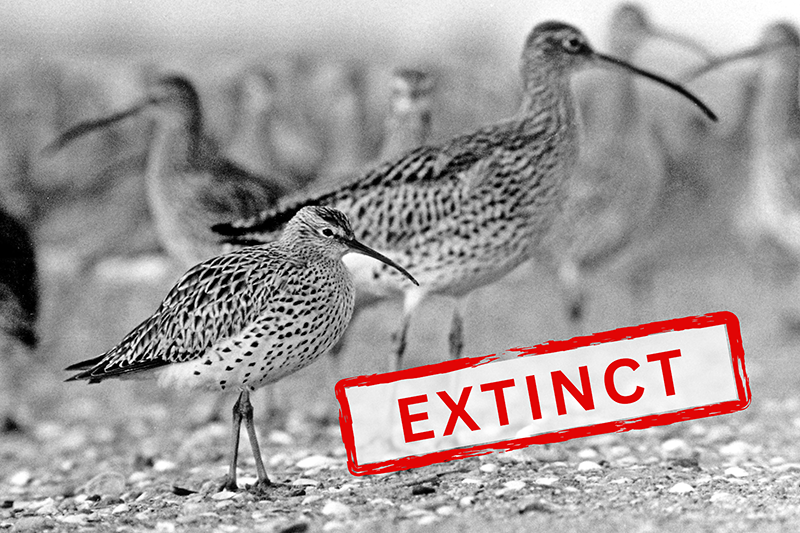
Remembering the Slender-billed Curlew: Reflections on a Lost Species
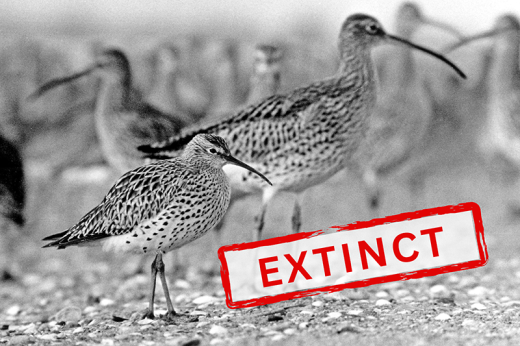
On 10 October 2025, the Slender-billed Curlew (Numenius tenuirostris) was officially declared extinct - the first migratory waterbird species listed under the African-Eurasian Migratory Waterbird Agreement (AEWA) to be lost forever. Once a graceful traveller between Eurasia and North Africa, its disappearance marks a profound moment of reflection for all who work to protect migratory species and their habitats.
The last confirmed sighting of the Slender-billed Curlew was in Morocco in February 1995 - just four months before AEWA was formally negotiated and concluded in The Hague. For this species, the treaty established to conserve migratory waterbirds across Africa and Eurasia simply came too late.
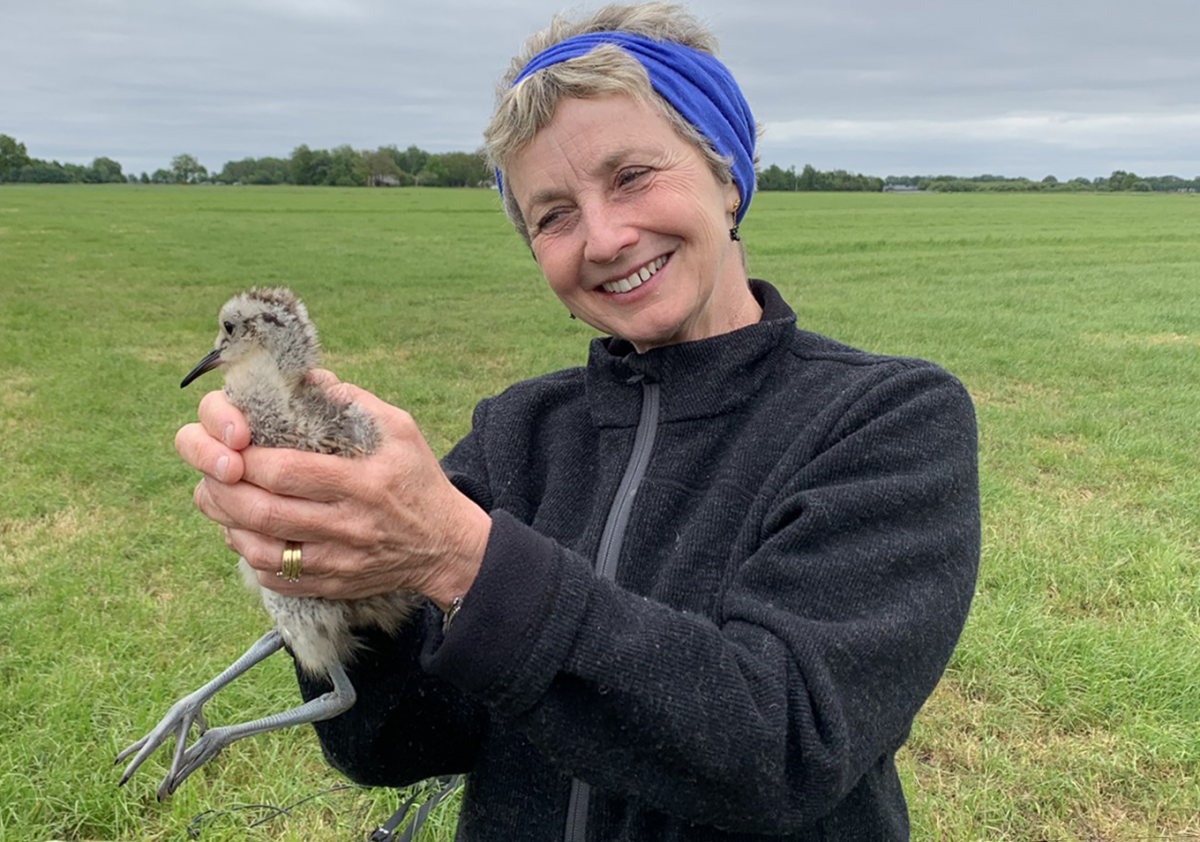
Yet the extinction of the Slender-billed Curlew stands as a stark reminder of why such cooperation is vital and why we must act earlier, faster, and together to prevent future losses. To honour its memory, the AEWA Secretariat has therefore launched this special feature collecting personal reflections and testimonies from those who searched for, studied, and cared deeply about this elusive bird - including from Mary Colwell, author, campaigner, and Chair of the Curlew Recovery Partnership England, who was the first to share her thoughts.
 Personal Reflections on the extinction of the Slender-billed Curlew
By Mary Colwell
Below are the unedited, personal responses of Mary Colwell as she reflects on the extinction of the Slender-billed Curlew. In her contribution, she speaks to the emotional weight of this loss and the urgent need to transform awareness into coordinated global action.
How did it feel to learn that the Slender-billed Curlew has now been officially declared extinct after all these years?
It’s hard to put into words the range of feelings, a mix of despair, resignation, helplessness, determination, and a sense that somehow everything has been diminished. To know that a bird as mysterious and graceful as the Slender-billed Curlew has truly gone is to feel the world contract a little.
For many of us, it isn’t just the loss of a species; it’s the loss of possibility, the chance that one might still be out there, returning on a tide or calling from a marsh. That faint hope has gone, and it leaves a deep uneasy and profoundly quiet sadness.
But alongside it comes resolve. We owe it to this bird to make its extinction mean something, to change the way we act, to refuse indifference, and to ensure no other species slips away unseen. What happens next will be the Slender-bill’s legacy.
If you could go back to those years of the last sighting, knowing what we know now, what would you have done differently?
Raised the roof, told the world, used all the new outreach platforms we have now to tell people what is happening.
From your experience and knowledge, what were the most critical factors that contributed to the Slender-billed Curlew’s disappearance?
The disappearance of the Slender-billed Curlew was the result of many interlocking pressures, but beyond the direct causes was something more insidious: silence.
Only a few people within a confined sphere knew what was happening — a handful of birdwatchers, scientists and policymakers. The wider world didn’t know and therefore couldn’t care. If they had, all kinds of pressure could have been brought to bear: public concern, diplomatic action, funding, public education, protection on the ground. But the curlew faded quietly, largely unnoticed, slipping through the cracks of fragmented knowledge and international responsibility.
Its story shows that extinction is a communication failure, a sign that our systems for noticing and responding are still too small, too slow, and too inward-looking. The greatest danger to wildlife is often not hostility, but absence of understanding and attention.
Despite the extensive searches and monitoring efforts, no further individuals were ever found since the last sighting in 1995. What does this tell us about the limits and the importance of field research/monitoring? What role does it place for the conservation of the species?
The long searches for the Slender-billed Curlew show both the power and the limits of fieldwork. Seeing it and knowing what’s happening on the ground are vital, but not enough. The world has to know and care.
Conservation must be better at explaining why these species matter, and at letting people come along on the journey to protect them. When knowledge stays within a small circle of specialists, it loses the wider energy that can drive action. The Slender-billed Curlew’s story shows how silence and invisibility can be as dangerous as habitat loss and hunting.
Monitoring gives us evidence, but communication gives us allies. For any species to survive, science and awareness must walk hand in hand. One gathers the truth, the other gives it life and meaning in the world.
What lessons from the Slender-billed Curlew case are most relevant to other threatened migratory (waterbird) species today?
All species are unique and have their own story to tell. Water birds have a special place in the human imagination. They occupy liminal spaces; they inhabit land that can’t be trod and remain elusive. We understand that mystery. Waterbirds and their calls summon up all kinds of images and emotions. Every single species can do that, the opportunity to engage the hearts and minds of the public is immense. The story of the Slender-billed Curlew shows that protection cannot stop at borders, they depend on a chain of wetlands, fields and coastlines that stretch across nations. They depend on a variety of cultures, attitudes, policy and awareness.
It also teaches us that rarity is not the same as resilience. A species can seem secure in part of its range while vanishing elsewhere, unseen. We need to strengthen cooperation between countries and along flyways, but just as importantly, we need to bring people into the story.
The Slender-billed Curlew shows what happens when awareness lags behind decline. The next step for conservation is not only to collect data, but to connect hearts. Migratory birds bind continents together, and their fate is inseparable from our own. We all need to know and understand that.
The Slender-billed Curlew was once widespread across Europe, North Africa, and Asia. What does its extinction say about our ability (or inability) to protect species that cross many borders?
In 1949, Aldo Leopold wrote his seminal essay, “Thinking like a mountain”. It urged us to move out of the human sphere and to see the world as a mountain does, to see what happens when holistic, joined-up thinking fails. It was an essay that changed conservation and changed Leopold’s heart. To save migratory species, we must think like migrating birds, to see beyond boundaries and conservation silos. Conservation for species that travel the world must be grounded in big thinking and cooperation. The Slender-billed Curlew shows how fragile our systems are when species depend on shared care across borders. It moved from Siberia to North Africa, crossing dozens of countries, yet it belonged fully to none. That absence of clear responsibility and global will proved fatal.
Its loss tells us that while our treaties and frameworks like AEWA and the Convention on Migratory Species recognise the problem, but there is a missing link, a powerful driver to put words into action.
What can the extinction of the Slender-billed Curlew teach us? What do we / countries need to do differently?
The loss of the Slender-billed Curlew should shake us deeply. It was a bird that moved invisibly across borders, connecting wetlands, peoples and cultures from Siberia to North Africa, and yet it slipped through the gaps between our nations, our institutions, and our priorities. That is exactly where Multilateral Environmental Agreements like the Convention on Migratory Species (CMS) and AEWA must now stand firm: in the spaces between. Their purpose is to ensure that migratory species are never again abandoned to fragmented action and indifference.
The Slender-billed Curlew teaches us that treaties alone are not enough; they must be living frameworks that drive collaboration, fund monitoring, cooperate on outreach, and hold countries accountable for delivery on the ground. It was not knowledge we lacked — it was co-ordination, urgency, and the will(including public will) to act across jurisdictions. For future species, MEAs need to be proactive rather than reactive, turning shared data into binding commitments, enabling local communities to protect sites, and insisting that economic development respects migration routes.
To prevent another loss like this, countries must move beyond paper commitments to genuine, open, public-facing partnership: joined-up flyway conservation, long-term funding for field research, and a moral recognition that what happens to a bird on one shore matters on all others. The extinction of the Slender-billed Curlew is a call to close the space between knowing and effective action.
In recent years, we’ve seen both success stories (like the Taiga Bean Goose, Northern Bald Ibis) and tragedies (like this extinction). What distinguishes conservation success from failure? What are some of the lessons we can learn from this extinction?
Conservation is 10% wildlife management, 90% people management. Success and failure in conservation are rarely about how much we know, they’re about how quickly we act, and how well we connect science, policy and people. The Taiga Bean Goose and the Northern Bald Ibis show what can be achieved when collaboration is real: when countries share data, invest in habitat protection, and support the people on the ground who make recovery happen.
The Slender-billed Curlew’s extinction tells a different story. Its decline went largely unseen, scattered across borders and decades. There was no urgency until it was too late. The lesson is painfully clear: delay is deadly.
We need conservation systems that are nimble, inclusive and international in practice, not just in aspiration, where assertive action begins when warning lights first flicker, not when they’re blazing red. The fate of the Slender-billed Curlew should teach us that we cannot save species in isolation; survival depends on joined-up landscapes, informed communities, and shared resolve.
What would you say to policymakers preparing for AEWA MOP9 and CMS COP15 in light of this loss?
To policymakers heading into AEWA MOP9 and CMS COP15, I would say this: the extinction of the Slender-billed Curlew must not be treated as a sad footnote, it is a signal of system failure. A migratory bird that once tied Siberia to North Africa vanished not because we lacked treaties, but because we failed to act through them with urgency and cohesion.
These conventions are only as strong as the courage and cooperation behind them. They must move from statements of intent to instruments of delivery, with funding that reaches the field, monitoring that is continuous, and decisions that integrate local knowledge, with global science. And then, crucially, tell the world.
The Slender-billed Curlew should be a moral compass: a reminder that extinction is not abstract policy but an irreversible silence. Let its loss guide a renewed determination to protect what remains.
How do you (or generally speaking scientists and conservationists) cope emotionally with the extinction of a species they studied or tried so hard to save?
When a species disappears, it’s not just a scientific loss, a bird lost from a list, it’s a bereavement. Those who have spent years studying or protecting that bird, animal or habitat often experience what we now call ecological grief: the pain of losing something irreplaceable, something you have known and cared for. Over time, that can turn into emotional attrition, a slow wearing down of hope under the weight of continual decline and inadequate response. Many conservationists feel profoundly alone in the face of that enormity, holding both the knowledge of what’s being lost and the frustration of not being able to stop it.
Coping means finding ways to share that burden. We can do this through community, art, cultural tradition, and conversation which recognises that caring deeply is not weakness but strength. We need systems that support those working at the sharp end of extinction, that make space for emotion as well as evidence. Because if we lose our capacity to feel, we lose the very reason we fight to protect life in the first place.
Do you think the public truly grasps what it means when a species is declared extinct? What could we do to make more people care? And what would be different as a result?
I don’t think most people truly grasp what extinction means — the finality and forever-ness of it. It sounds abstract, like a word from a textbook, and we are used to science sorting out the problems. The reality is the end of a song, of a presence that once moved freely across skies and generations. When a species like the Slender-billed Curlew is declared extinct, the world becomes measurably quieter, not just biologically, but spiritually.
Part of the problem is distance. These losses often happen far from daily life, in wetlands or migration routes most people will never see. To make people care, we have to close that distance, to tell stories, show the beauty that’s being lost, and help others feel part of the same living world.
If we did that, if extinction was felt as a shared wound rather than an academic fact, then policy, funding, and public-will would look very different. We would move from crisis response to care, from grief to prevention. And maybe then, no more species would have to vanish before we notice their absence.
What message would you want the Slender-billed Curlew’s story to send to the next generation? What message would you like to give to future policy makers, conservationists and bird/nature enthusiasts?
The story of the Slender-billed Curlew should be both a warning and a source of resolve. It reminds us that beauty can vanish quietly, even in an age of science and treaties and technology. It was lost not through malice but through neglect and through a thousand small failures to notice, to care, to connect the dots in time.
To the next generation: don’t look away. Let this extinction deepen your sense of responsibility, not your despair. Every species, every patch of land or stretch of wetland, is part of the same living system that sustains us. You have the chance to rebuild that connection, to bring compassion, fresh perspectives and new creativity into how we live with the rest of nature.
And to future policymakers and conservationists - be bold, be joined-up, and be human. Protecting life on Earth is not just technical work, it’s moral work. We are increasingly technological, transactional, data drive and framed by legality – sometimes we forget we are still fragile humans with feelings and failures. The Slender-billed Curlew should live on as a reminder of what happens when we forget that, and as a promise that we can choose differently next time.
How can we turn the extinction of the Slender-billed Curlew into a catalyst for stronger, efficient, and more coordinated conservation action?
The extinction of the Slender-billed Curlew must not end in silence. Its story shows us what happens when information is scattered, responsibility is diluted, and urgency is lost in businesses and bureaucracy. To honour this bird, we have to build a system that acts before crisis, not after.
That means joining up local knowledge, science, and policy across borders, so that early warnings are heard and acted upon. It means resourcing field monitoring properly, empowering communities who live alongside wildlife, embedding nature-knowledge across society, and ensuring that treaties like AEWA and CMS are engines of delivery, not repositories of good intentions.
But more than that, it means rebuilding trust between sectors, between nations, and between people and nature. The Slender-billed Curlew can still guide us, if we let its loss teach us humility, urgency, and the value of collective care. Extinction should not close a chapter; it should start a movement.
If there’s one key lesson the world should take from this extinction, what would it be?
If there’s one lesson the world should take from the extinction of the Slender-billed Curlew, it’s this: knowing is not the same as doing. We knew enough to act, but we didn’t act in time. Knowledge without coordination, without commitment, is powerless. I always return to Bab Dioum, we will conserve what we love, we will love what we understand and we will understand only what we are taught.
The curlew’s loss reminds us that conservation isn’t about data alone, it’s about will, empathy, education and courage across borders. Extinction happens not just in remote wetlands, but in the spaces between our decisions.
The lesson is simple, and profound: when the warning signs appear, act together, fast, and with heart. If we don’t this scenario will be on repeat for generations to come.
ABOUT:
This feature on the Slender-billed Curlew prepared by the AEWA Secretariat is intended as a living memorial and a source of inspiration - a human narrative around loss, learning, and renewed commitment for the conservation of migratory species. The extinction of the Slender-billed Curlew reminds us that for this species, international efforts to conserve it simply came too late. However, we strongly feel that the story of its extinction can also be a source of inspiration that will strengthen our resolve to ensure no other AEWA species will meet the same fate.
If you or someone you know has a story to share about the Slender-billed Curlew, we invite you to contribute to this archive of human remembrance, inspiration and hope by writing to: [email protected]