
Swaziland to Become 69th Contracting Party to AEWA
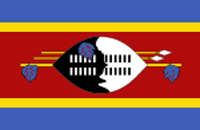 Bonn,
6 November 2012 - The UNEP/AEWA Secretariat is pleased
to announce the accession of the Kingdom of Swaziland
to the Agreement on the Conservation of African-Eurasian
Migratory Waterbirds (AEWA).
Bonn,
6 November 2012 - The UNEP/AEWA Secretariat is pleased
to announce the accession of the Kingdom of Swaziland
to the Agreement on the Conservation of African-Eurasian
Migratory Waterbirds (AEWA).
With the submission of the instrument of accession to the Depositary, the Agreement will enter into force for Swaziland on 1 January 2013, which will raise the number of AEWA Contracting Parties to 69. Earlier this year, the Republic of Zimbabwe joined AEWA, and Gabon as well as the Kingdom of Morocco will accede to the Agreement on 1 December 2012.
Located in South East Africa, Swaziland, though one of the continent’s smallest countries, is endowed with a remarkable variety of habitats, translating into a significant variety of flora and fauna. Apart from its eastern border, shared with Mozambique, Swaziland is completely surrounded by South Africa. Its western half is mountainous, descending to an open rural space to the east covered in grass or low scrub, while the border to the east is dominated by the escarpment of the Lebombo Mountains.
As a result of the altitudinal range and consequent habitat variability the country has high levels of biodiversity. According to BirdLife Data Zone, Swaziland’s avifauna consists of a total of 465 different bird species. Out of these, 64 migratory waterbird species are listed under AEWA, including the Vulnerable Wattled Crane (Bugeranus carunculatus) and the Endangered Grey-Crowned Crane (Balearica regolorum). Swaziland is clearly of great importance for migratory waterbirds using the East Atlantic and Black Sea/Mediterranean Flyways and concerted action towards the conservation of these species is therefore essential.
In addition to AEWA, Swaziland is a Party to a number of other environmental treaties such as the Convention on Biological Diversity (CBD), the United Nations Framework Convention on Climate Change (UNFCCC), the Convention to Combat Desertification (UNCCD) and the Convention on International Trade in Endangered Species of Wild Fauna and Flora (CITES).
The UNEP/AEWA Secretariat warmly welcomes Swaziland and is looking forward to closely working with the responsible national authorities and other stakeholders in Swaziland to support implementation of the Agreement in the country.