
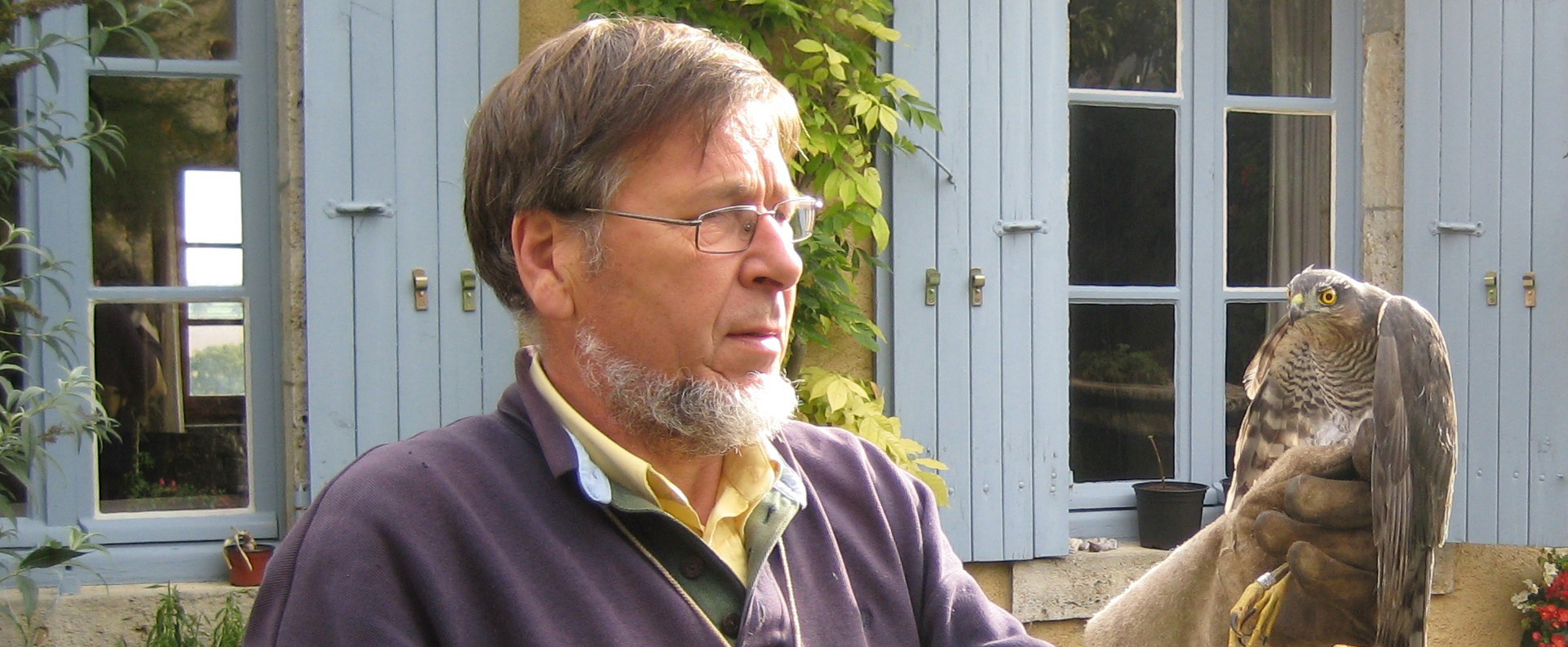
In Memoriam: Gerard C. Boere (1942–2026)
Bonn, 14 January 2026 - The AEWA Secretariat is deeply saddened by the passing of Dr. Gerard C. Boere, Honorary Patron and Founder of the Agreement on the Conservation of African-Eurasian Migratory Waterbirds (AEWA). Gerard passed away peacefully on 6 January 2026, at his home in Gorssel, the Netherlands, at the age of 83.
Born in Zutphen on 2 November 1942, Gerard devoted his life to the study and conservation of migratory birds. A zoogeographer and palaeontologist by training, his fascination with migratory birds began in childhood and through involvement with the Dutch Protestant Youth Organisation for Nature (CJN) in the 1960s, and it later developed into a distinguished professional career dedicated to international waterbird conservation. His doctoral research on the Dutch Wadden Sea as a moulting area for Arctic waders laid the foundation for his lifelong engagement with conservation efforts for migratory waterbirds and the advancing of the concept of flyway conservation, culminating in the establishment of AEWA.
Gerard was instrumental in the development of AEWA, seeing the potential that the then recently adopted Convention on Migratory Species (CMS) gave to create a legal instrument for migratory waterbirds, and then working tirelessly from the late 1980s towards the Agreement’s conclusion in The Hague in 1995 and its entry into force in 1999. He remained closely involved with AEWA afterwards, being formally responsible for the Interim Secretariat from 1995 until after AEWA’s entry into force. In this role and subsequently he contributed to its strategic direction, implementation, and international profile, including through initiatives such as the UNEP-GEF African-Eurasian Wings Over Wetlands (WOW) Project, where he acted as special advisor and Chair of the Project Steering Committee, chairing the novel Wadden Sea Flyway Initiative, and supporting – over many years - the quest for the last remaining Slender-billed Curlew – ultimately to be unsuccessful. His vision of AEWA as a cooperative and practical tool to enhance and implement flyway-level conservation among countries across Africa and Eurasia continues to guide the implementation of the Agreement today.
Gerard also made an enduring contribution to documenting the institutional memory of AEWA, especially the early history of the negotiation process which led to the creation of the treaty. To mark the 15th Anniversary of the Agreement, he authored the AEWA History Book, working in close collaboration with the AEWA Secretariat. This richly illustrated publication was launched at the celebration of the 15th Anniversary of AEWA in June 2010 in The Hague, where Gerard also delivered a keynote address. Such detailed documentation of all aspects of the “treaty-creation” process is unique internationally.
A further highlight of Gerard’s international legacy was his central role in the 2004 Waterbirds Around the World Conference. Originally planned to be held in the Netherlands as a Dutch initiative, the event became a highly successful joint Dutch-UK event with the conference ultimately being held in Edinburgh with the highest level of political support in both countries. As one of the principal organisers of this landmark global gathering and co-editor of the resulting impressive conference proceedings (published in 2006), Gerard helped bring together more than 450 experts from around 90 countries including fundraising for an unprecedented scale of support for delegates from many less developed countries. He was instrumental in encouraging international frameworks (including AEWA’s Technical Committee, CMS’s Scientific Council and the EU’s Birds Directive’s Ornis Committee) to hold their meetings in the UK (Scotland) back-to-back with the conference. The conference and its proceedings provided an unprecedented global overview of international waterbird conservation and the very concept of flyway conservation, a concept which he helped coin. The Waterbirds Around the World Conference proceedings edited by Gerard C. Boere, Colin A. Galbraith, and David A. Stroud remains a seminal reference for waterbird conservation scientists and policymakers worldwide.
Aside from his long professional roles within the Dutch government, he had life-long engagement with the non-governmental sector. As well as in the Netherlands, this included roles with the newly formed Wetlands International; chairing the International Wader Study Group for many years; and also encouraging the development - in the 1990s - of bird conservation NGOs in the Commonwealth of Independent States. He recognised and encouraged the way that governments, NGOs and international treaties could productively work together to collectively move conservation forward.
In recognition of his outstanding contributions to nature conservation, Gerard was appointed Officer in the Order of Orange-Nassau and received the WWF International Award for Conservation Merit. Gerard was awarded the status of AEWA’s first Honorary Patron in 2005, during the 3rd Session of the Meeting of the Parties (MOP3) in Dakar, Senegal, in recognition of his pivotal role as a Founder of the Agreement and his enduring commitment to its implementation. His contribution to AEWA was recently honoured again on 11 November 2025, during AEWA’s 30th Anniversary celebration, held on the opening day of the 9th Session of the Meeting of the Parties in Bonn, Germany. Although unable to attend in person, his words and reflections were shared by David Stroud, AEWA’s other Honorary Patron, who spoke on behalf of both at the event. Among the many species listed under AEWA, he held a particular fondness for the Dunlin (Calidris alpina), emblematic of the complex flyway systems he worked so passionately to conserve.
Gerard Boere will be remembered not only for his scientific and professional achievements and visionary leadership, but also for his gentle kindness, support for others, elegant diplomacy and long-lasting commitment to flyway conservation and international cooperation. AEWA has lost one of its most important champions and visionaries, but his legacy will continue to inspire the Agreement and the wider flyway conservation community for generations to come.
The AEWA Secretariat would like to extend its sincere condolences to his wife Ella, his children and grandchildren, and all who had the privilege of working with and knowing him. He will be greatly missed.