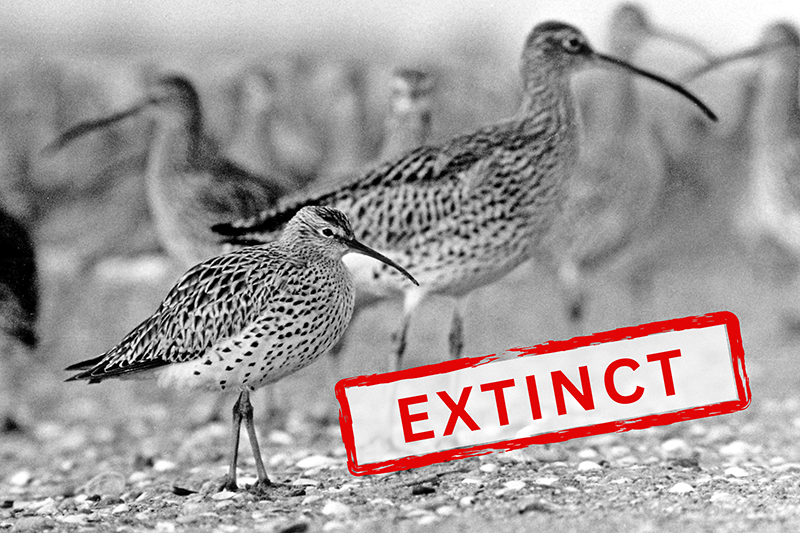
Remembering the Slender-billed Curlew: Reflections on a Lost Species
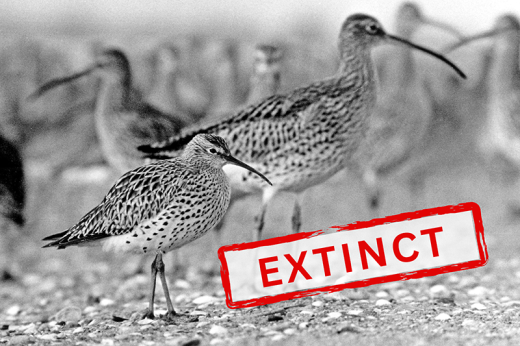
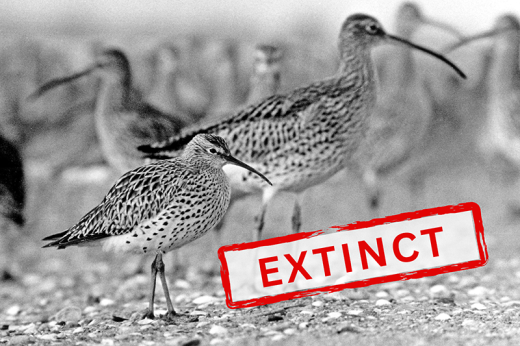
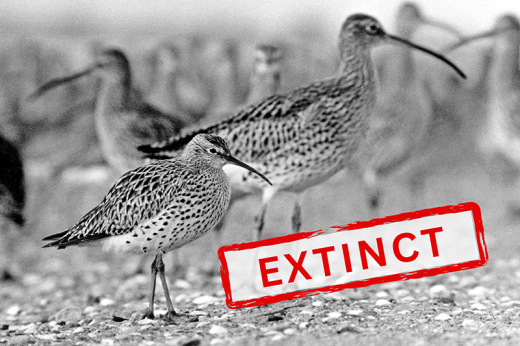
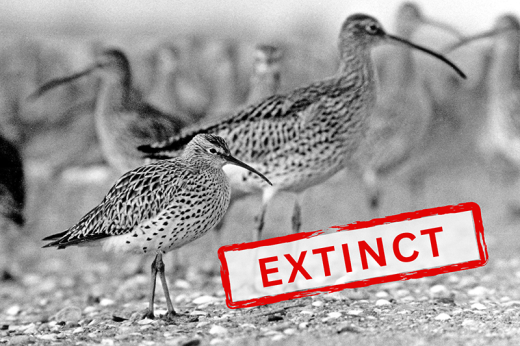
On 10 October 2025, the Slender-billed Curlew (Numenius tenuirostris) was officially declared extinct - the first migratory waterbird species listed under the African-Eurasian Migratory Waterbird Agreement (AEWA) to be lost forever. Once a graceful traveller between Eurasia and North Africa, its disappearance marks a profound moment of reflection for all who work to protect migratory species and their habitats.
The last confirmed sighting of the Slender-billed Curlew was in Morocco in February 1995 - just four months before AEWA was formally negotiated and concluded in The Hague. For this species, the treaty established to conserve migratory waterbirds across Africa and Eurasia simply came too late.
Yet the extinction of the Slender-billed Curlew stands as a stark reminder of why such cooperation is vital and why we must act earlier, faster, and together to prevent future losses. To honour its memory, the AEWA Secretariat has therefore launched this special feature collecting personal reflections and testimonies from those who searched for, studied, and cared deeply about this elusive bird - including from Adam Gretton, who has worked on Slender-billed Curlew for ICBP, then BirdLife International, from May 1988 to December 1994. He has taken a close interest in the species ever since, liaising with Gerard Boere, Nicola Crockford and others. After 25 years working for Natural England, in a wide variety of roles, he is now semi-retired and a Vice-President of the Suffolk Bird Group.
 Personal Reflections on the extinction of the Slender-billed Curlew
By Adam Gretton
Below are the unedited, personal responses of Adam Gretton as he reflects on the extinction of the Slender-billed Curlew.
Although long-expected, the official demise of the Slender-billed Curlew provokes quite an overwhelming mixture of memories and reflections. I began work on the species for BirdLife (then ICBP) over 37 years ago, age 26. Before accepting the role I expressed my concern that it may already have been too late - wishing of course to be proven wrong.
The work took me to many countries, and I worked with some great people, all fully committed to doing whatever we could to save the species. I very much doubt we could have done more, given the resources that existed at the time (no light-weight satellite tags, no google earth imagery, not even emails!). There is a strange mis-conception that the three weeks I spent at Merja Zerga (January 1989, 1990 and 1994) in some way limited what might have been done in SW Siberia. In each of those three years I joined lengthy expeditions from Novosibirsk, in late May and June, so these efforts were in no way limited by other visits.
The Siberian expeditions were organised by Dr AK (Sasha) Yurlov, who also worked closely with Gerard Boere and very sadly died far too young a few years ago. Without him, my wife Svetlana and I wouldn't have met, so we owe him a great deal. Having looked for the SbC in vain for many years in Siberia, I fondly recall him seeing his first SbC at a workshop at Merja Zerga in January 1994.
Regarding the questions on what lessons can be learned, the main one in my view is to act with all possible urgency, and with maximum resources, when species are recognised to be in danger. I was fortunate to volunteer for RSPB on Spoon-billed Sandpiper surveys in E China in 2014 and 2015, and was invited to give talks there on the lessons learned from the Slender-billed Curlew’s demise (as has Nicola Crockford on other occasions). The declaration of the key sites as a World Heritage Site was truly remarkable, but the future of Spoon-billed Sandpiper still hangs in the balance.
ABOUT:
This feature on the Slender-billed Curlew prepared by the AEWA Secretariat is intended as a living memorial and a source of inspiration - a human narrative around loss, learning, and renewed commitment for the conservation of migratory species. The extinction of the Slender-billed Curlew reminds us that for this species, international efforts to conserve it simply came too late. However, we strongly feel that the story of its extinction can also be a source of inspiration that will strengthen our resolve to ensure no other AEWA species will meet the same fate.
If you or someone you know has a story to share about the Slender-billed Curlew, we invite you to contribute to this archive of human remembrance, inspiration and hope by writing to: [email protected]