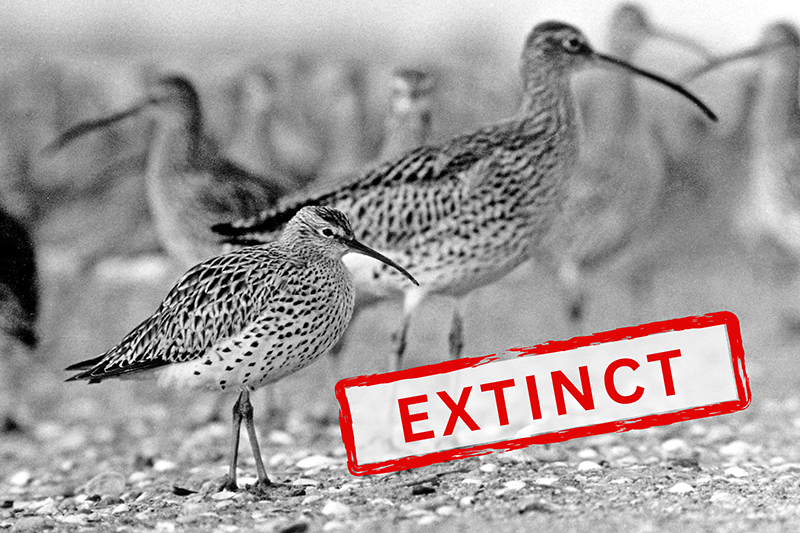
Remembering the Slender-billed Curlew: Reflections on a Lost Species
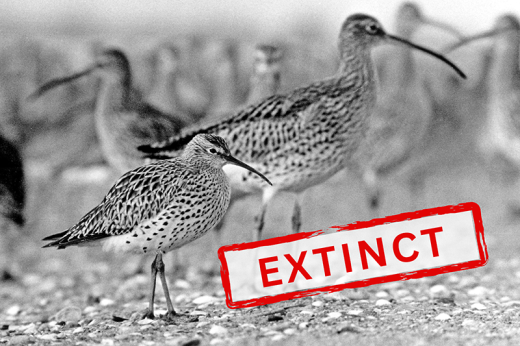
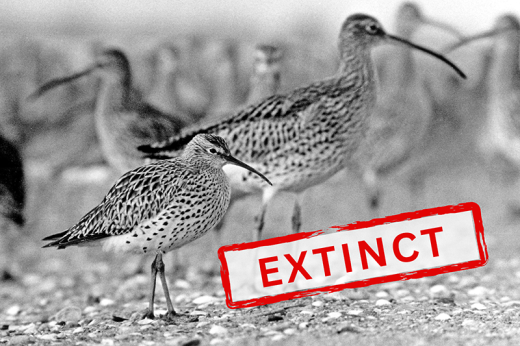
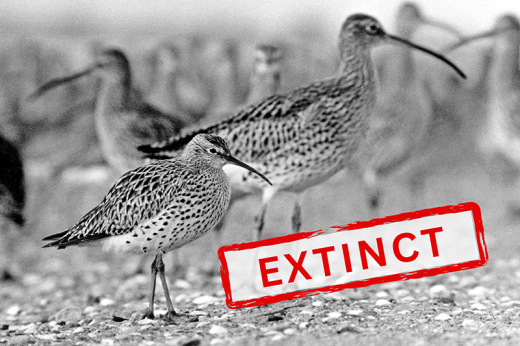
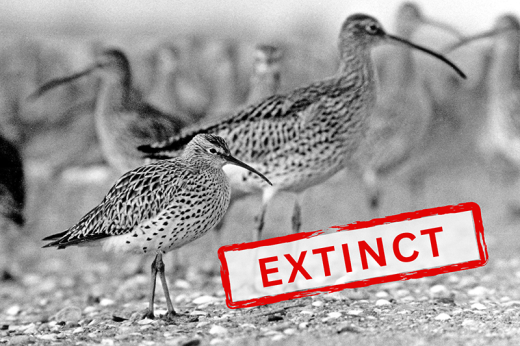
On 10 October 2025, the Slender-billed Curlew (Numenius tenuirostris) was officially declared extinct - the first migratory waterbird species listed under the African-Eurasian Migratory Waterbird Agreement (AEWA) to be lost forever. Once a graceful traveller between Eurasia and North Africa, its disappearance marks a profound moment of reflection for all who work to protect migratory species and their habitats.
The last confirmed sighting of the Slender-billed Curlew was in Morocco in February 1995 - just four months before AEWA was formally negotiated and concluded in The Hague. For this species, the treaty established to conserve migratory waterbirds across Africa and Eurasia simply came too late.
Yet the extinction of the Slender-billed Curlew stands as a stark reminder of why such cooperation is vital and why we must act earlier, faster, and together to prevent future losses. To honour its memory, the AEWA Secretariat has therefore launched this special feature collecting personal reflections and testimonies from those who searched for, studied, and cared deeply about this elusive bird - including from Nicola Crockford, Principal Policy Officer at the Royal Society for the Protection of Birds (RSPB), who has served as BirdLife International’s representative for the Convention on Migratory Species (CMS) and AEWA for many years and also chair(ed) the (now dormant) CMS Slender-billed Curlew Working Group.
 Personal Reflections on the extinction of the Slender-billed Curlew
By Nicola Crockford
Below are the unedited, personal responses of Nicola Crockford as she reflects on the extinction of the Slender-billed Curlew.
How did it feel to learn that the Slender-billed Curlew has now been officially declared extinct after all these years?
Desolate. I devoted several years of my life, after being appointed chair of the Slender-billed Curlew Working Group in 2008, to trying to prove the bird was not extinct.
Between 2009 and 2011, we at RSPB deployed dozens of international volunteer observers to more than 680 sites in 19 countries of the species’ non-breeding range, with additional search effort from national waterbird counters in more than 12 additional countries. Only a couple of teams (in the Crimea) reported birds that could have been Slender-billed Curlews, but neither with sufficient evidence to definitively prove the existence of the bird.
I continue to receive a few reports of potential SbCs every year, but since 2010, nothing has come close. Always until now there was an – admittedly shrinking – grain of hope that a new report would be the real deal. Now I must extinguish that hope.
If you could go back to those years of the last sighting, knowing what we know now, what would you have done differently?
Well the truth is, that I am not sure that the technology was available to do what was needed, and what we planned to do if we had found any SbCs during the search in 2009-11. This was to catch the bird and fit with a satellite tag. Only in around 2010 had these tags become small enough to fit safely on a bird as small as the SbC. Only with such tags could we find out the places the birds use throughout their annual cycle and put the necessary conservation measure in place at each of these.
Of course, if regulations such as, CMS, AEWA, the Bern Convention and the EU Birds Directive had existed even 50 years before they did, then maybe the unsustainable hunting could have been curbed. The EU did introduce controls in the 1990s on key SbC range states such as Italy to ban hunting of confusion species, but by that time, our research suggests it was too late.
Unfortunately, unsustainable agriculture in the potential breeding and staging grounds, and damage to Mediterranean coastal wetlands, continue. It is too late now for the SbC to protect, manage and restore their habitats, but there is still time to prevent their fate happening to the other vulnerable bird species – many of which were counted by the SbC searchers back in 2009-2011 - that depend on them, by finding ways to avoid the mistakes of the past and restore habitats from the damage they have undergone.
What were the main challenges in studying (and finding) such an elusive and declining species?
We were lucky, when we undertook the search in 2009-2011 to have satellite imagery to help us refine where to deploy the searchers, and optical, photographic and sound recording equipment of a much higher quality than would have been available even in 1995 when the last SbC was seen.
We decided to focus our search on the non-breeding range of the SbC as there were many historical records from these areas (although many of those records would not stand up to scrutiny, knowing now what a challenge SbC identification can be relative to other subspecies of Curlew and Whimbrel).
In contrast, there was only one known breeding location of the SbC, the breeding range of which could have extended over vast areas of steppe/taiga/tundra in Russia and Central Asia, so any search was truly a needle in a haystack.
From your experience and knowledge, what were the most critical factors that contributed to the Slender-billed Curlew’s disappearance?
In our 2024 paper in Ibis, “Global extinction of Slender-billed Curlew (Numenius tenuirostris)” we conclude Although several threats to the species have been suggested, those that definitively drove the species to extinction will never be known.
In more detail:
The pressures that resulted in the species’ extinction are mostly unvalidated inference and may never be understood and quantified. Our understanding has advanced little since the Slender-billed Curlew action plan was published (Gretton 1996). At that time, habitat loss on the breeding and non-breeding areas, and hunting, were identified as pressures on the species. Allee effect was also cited as a potential pressure, with few individuals across a wide area resulting in a reduced probability of finding a mate and breeding.
The potential role of the direct anthropogenic pressures (habitat loss and hunting) will probably never be known, as the full range of habitat associations of the species are not documented.
However, personally I am drawn to circumstantial, unpublished evidence that suggests that the loss of locusts due to grassland habitat loss and intensive spraying in the steppes and north Africa contributed to their decline. This would parallel a likely cause of the loss of the SbC’s cousin in the Americas, the Eskimo Curlew. On its spring migration to its Arctic breeding grounds it was said to refuel on the eggs of the Rocky Mountain Grasshopper that was prevalent in the prairies until these were burnt and ploughed up and became extinct at the start of the 20th century.
Despite the extensive searches and monitoring efforts, no further individuals were ever found since the last sighting in 1995. What does this tell us about the limits and the importance of field research/monitoring? What role does it place for the conservation of the species?
Monitoring of wildlife is the basic accountancy mechanism for biodiversity conservation, and as an ultimate measure of sustainability. Just as it would be unthinkable to operate without financial accountancy, it should be unthinkable to operate without robust wildlife monitoring. Especially now that the technology is so much more advanced than in 1995, there is no excuse not to put it in place.
Likewise, just as in medicine it is unthinkable to deploy treatments without evidence on what works, it should be unthinkable to deploy protection, management, restoration and policy interventions without gathering and using evidence on what works.
Until we, as a conservation community, put these mechanisms universally and robustly in place, I fear we are doomed to keep failing – and in the worst case, that means losing more species forever.
What lessons from the Slender-billed Curlew case are most relevant to other threatened migratory (waterbird) species today?
Because I was so devastated by not managing to prove the continued existence of the SbC, when the RSPB decided in 2009 to prioritise for our Global Species Recovery work, the next most threatened migratory shorebird in the world, the Spoon-billed Sandpiper, over in the East Asian Australasian Flyway, I have since devoted much of my life to contributing to efforts to prevent the extinction of this bird.
This species was more lucky than the SbC because there will still a few hundred birds left by the time it had a Task Force (under the East Asian Australasian Flyway Partnership – EAAFP) and an action plan adopted by EAAFP and CMS. At that time the population was declining by 26% per year with extinction predicted by 2018. Thankfully, this rate of decline – although not yet halted – has slowed to 5% per year, giving us potentially a few more decades to halt the decline and put recovery in place.
The SbS has become a key poster child for true flyway conservation, where with the clear of objective preventing its extinction, a huge range of stakeholders, from local to global, and global to local, deploy every tool in the conservation kit – from monitoring, research, to conservation breeding, stopping illegal/unsustainable hunting and policy advocacy.
I focussed my effort on supporting China and the Republic of Korea to protect the remaining tidal flats of the Yellow Sea, where all the SbS stage on spring and autumn migration between nesting grounds in arctic Russia and the places they spend the northern winter from South China to Bangladesh. These areas are now World Heritage Sites accompanied by strong legislation to prevent further land claim of intertidal coastal wetlands.
If the globally important wetlands of the Mediterranean on which the SbC depended could have had such protection in time, the chances are we’d still be able to enjoy these legendary birds.
The Slender-billed Curlew was once widespread across Europe, North Africa, and Asia. What does its extinction say about our ability (or inability) to protect species that cross many borders?
The population trends of migratory species are a measure of international cooperation on biodiversity conservation, just as carbon is in relation to climate change. The SbC extinction represents a collective failure of all its range states.
Now its nearest relative in the African-Eurasian Flyway, the Eurasian Curlew is globally Near Threatened with extinction, despite a significant reduction in hunting in Europe. Primary causes of its decline include intensification of agriculture and afforestation of their grassland and upland nesting sites in the British Isles and other breeding range states.
This is a massive wake up call. Many are rising to the challenge of saving this species, including in the framework of an AEWA Single Species Action Plan, before it can follow the SbC to oblivion. Many more need to join them if land use is to become sufficiently sustainable to ensure the survival of the Eurasian Curlew and many other species.
The current status of the Eurasian Curlew is an indicator that we are a long way from meeting the SDGs and GBF goals. This is a species where we know broadly what to do to save it but land use policies and practices are failing to deliver these.
How do you view the role of Multilateral Environment Agreements and treaties like CMS and AEWA in preventing similar losses in the future? What can the extinction of the Slender-billed Curlew teach us? What do we / countries need to do differently?
Multilateral processes are essential to the conservation of migratory species. Only by working together and holding each other to account can countries put in place the policies and practices that are compatible with survival and thriving of migratory species. The broad GBF goals can only be achieved by following the more detailed technical guidance relevant to HOW to meet the goals, as produced through treaties such as AEWA, CMS and the Convention on Wetlands.
Investment by one country in conserving migratory species can be undermined by other countries that fail to conserve the places those birds use, and fail to prevent causes of mortality such as take and collision/electrocution by energy infrastructure.
In recent years, we’ve seen both success stories (like the Taiga Bean Goose, Northern Bald Ibis) and tragedies (like this extinction). What distinguishes conservation success from failure? What are some of the lessons we can learn from this extinction?
A characteristic of all conservation success stories for migratory species that I am aware of is utterly committed people, backed by supportive organisations, working across national borders from local to flyway/global level, deploying all the tools in the conservation kit, over the long term. Human connectivity is essential for conservating ecological connectivity which in turn is essential to prevent extinction of migratory species.
What would you say to policymakers preparing for AEWA MOP9 and CMS COP15 in light of this loss?
Please come to these MOPs/COPs:
- to ensure action to talk about rather than more talking about what to do
- with genuine ambition to achieve visualisable conservation objectives
- to achieve something that, when your children ask what you do at work, you can honestly describe as something they will be proud that you have spent your time on (eg something that ensures they have at least as much natural heritage as you do now)
- to achieve something that when you lie on your deathbed, you feel you did all you could to make the world a better place for the life we share it with.
- not just to negotiate a text to the lowest common denominator and then go home forget all about it, at least, until it is time to report to the next COP.
- not just as a cog in the wheel, to do the minimum to tick the boxes of your annual work objectives
- not even just for the “fun” of negotiating for negotiation’s sake
- with purposeful ambition, to use all your ingenuity, within whatever constraints you operate, to make the world a better place, with reduced chance that there will be any further extinctions of our fellow species
- determined to find ways of ensuring continuity between successive representatives of governments
- determined to liaise as much as possible with your national focal points of other MEAs and with other relevant ministries in preparing your negotiating positions, and more importantly, to ensure that the outcomes of the meetings are implemented not only within your own jurisdiction, but also across government as relevant
- by following the example of the most effective officials, who use NGOs to extend their capacity and facilitate approaches that are tricky within their own mandate.
How do you (or generally speaking scientists and conservationists) cope emotionally with the extinction of a species they studied or tried so hard to save?
Turn the grief into resolve to do everything within your capacity to prevent this happening to any other species. With down time including immersion in remaining nature.
Do you think the public truly grasps what it means when a species is declared extinct? What could we do to make more people care? And what would be different as a result?
No – most people are too divorced from nature, or take it for granted and do not realise that each extinction removes a brick from the wall of their own survival.
Make it easier for everyone to experience nature by being in nature in the wild, and empower them to consider availability of such nature as their right.
Increasing awareness of what healthy ecosystems look like, and that they should be the right of this and future generations – ie not a naked landscape heavily over grazed by sheep, nor a heavily manicured city park.
Have a nature index alongside GDP that is widely recognised and understood among citizens as a measure of sustainability ie the future of life on earth.
Empowering the electorate to use their vote for leaders who will do their best to prioritise nature and sustainability when trying to balance pressure for short term expedience.
What message would you want the Slender-billed Curlew’s story to send to the next generation? What message would you like to give to future policy makers, conservationists and bird/nature enthusiasts?
Taking all measures necessary to prevent one extinction will almost certainly ensure the survival of a whole suite of other species as well as bringing benefits to people.
The chances of preventing further extinctions are much less if people continue to work in silos, with territoriality/turf wars rather than cooperation, and with fragmentation and duplication of effort.
We need to think in a much bigger, more connected way. Physicists had to cooperate in order to mobilise resources for the Large Hadron Collider. Conservationists need to do the same to stop more extinctions, rather than continuing in a fragmented, blinkered way, without clear, sufficiently ambitious and communicable vision, and without building or using the evidence base on effectiveness.
What new policies, tools or technologies give you hope that future extinctions of migratory species/birds can be prevented?
CMS global initiatives on ecological connectivity and on illegal and unsustainable take have potential to be game changing for migratory species.
CMS and BirdLife led initiatives to combat illegal and unsustainable take of birds and minimise impacts of Energy Infrastructure.
Efforts such as those of the World Coastal Forum to facilitate an accelerated more holistic and joined up approach to the conservation of coastal wetlands, including urgently to replan coasts in the face of sea level rise and other climate change effects, and to scale up successful coastal wetland restorations including managed realignments.
The potential for serial transnational World Heritage Site to protect flyway site networks and hence deliver on ecological connectivity goals of the Global Biodiversity Framework.
The Regional Flyway Initiatives with development banks that BirdLife is facilitating.
New technologies, including harnessing citizen science platforms and remote sensing and drones, have potential to supplement existing methods of bird monitoring.
Data on bird movements including from satellite tagging have huge potential for identifying critical sites in terms of their ecological connectivity, as well as causes of mortality, if researchers pool data to enable strategic analyses at scale.
How can we turn the extinction of the Slender-billed Curlew into a catalyst for stronger, efficient, and more coordinated conservation action?
Mary Colwell is leading plans for a World Curlew Symposium to think innovatively about the way forward to prevent the extinction of the 8 remaining Curlew species.
If there’s one key lesson the world should take from this extinction, what would it be?
If we deploy concerted, cooperative, coordinated action for clear conservation objectives, from local to global, global to local, involving all stakeholders, using every tool in the conservation kit there need never be another migratory species extinction.
Business as usual is not good enough.
ABOUT:
This feature on the Slender-billed Curlew prepared by the AEWA Secretariat is intended as a living memorial and a source of inspiration - a human narrative around loss, learning, and renewed commitment for the conservation of migratory species. The extinction of the Slender-billed Curlew reminds us that for this species, international efforts to conserve it simply came too late. However, we strongly feel that the story of its extinction can also be a source of inspiration that will strengthen our resolve to ensure no other AEWA species will meet the same fate.
If you or someone you know has a story to share about the Slender-billed Curlew, we invite you to contribute to this archive of human remembrance, inspiration and hope by writing to: [email protected]