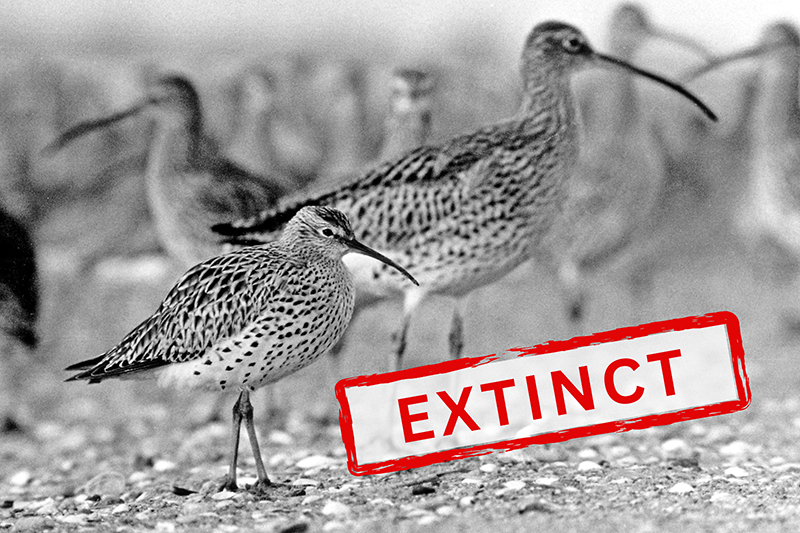
Remembering the Slender-billed Curlew: Reflections on a Lost Species
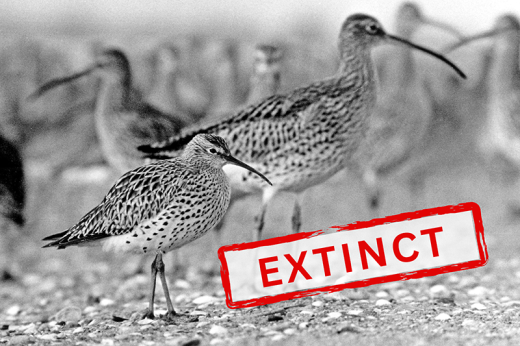
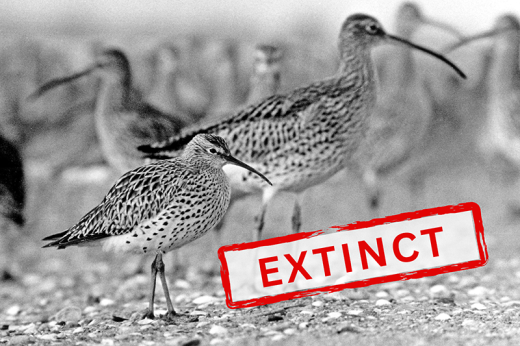
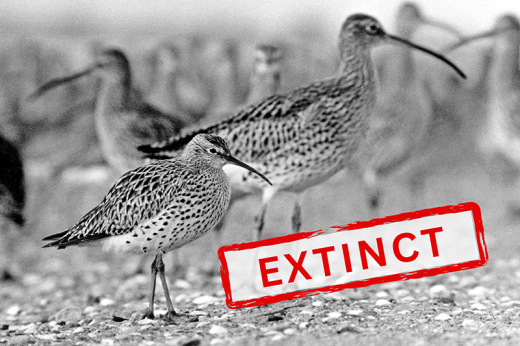
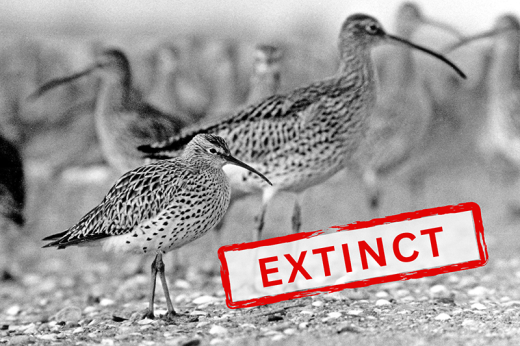
On 10 October 2025, the Slender-billed Curlew (Numenius tenuirostris) was officially declared extinct - the first migratory waterbird species listed under the African-Eurasian Migratory Waterbird Agreement (AEWA) to be lost forever. Once a graceful traveller between Eurasia and North Africa, its disappearance marks a profound moment of reflection for all who work to protect migratory species and their habitats.
The last confirmed sighting of the Slender-billed Curlew was in Morocco in February 1995 - just four months before AEWA was formally negotiated and concluded in The Hague. For this species, the treaty established to conserve migratory waterbirds across Africa and Eurasia simply came too late.
Yet the extinction of the Slender-billed Curlew stands as a stark reminder of why such cooperation is vital and why we must act earlier, faster, and together to prevent future losses. To honour its memory, the AEWA Secretariat has therefore launched this special feature collecting personal reflections and testimonies from those who searched for, studied, and cared deeply about this elusive bird - including from Graeme Buchanan, a lifelong birder and Head of International Conservation Science at the RSPB, where he leads a team of scientists to ensure conservation is driven by strong evidence.
 Personal Reflections on the extinction of the Slender-billed Curlew
By Graeme Buchanan
Below are the unedited, personal responses of Graeme Buchanan as he reflects on the extinction of the Slender-billed Curlew.
What were the main challenges in studying (and finding) such an elusive and declining species?
Information.
Starting with identification, it is only since the species was last seen that the identification of the species has been fully resolved, and it was as recent as 2014 that the best review was published. This leaves uncertainty over the identification of past records and museum skins. I know of at least one specimen in a museum that is incorrectly labelled. This uncertainty presented issues when it came to assessing records for our recent extinction probability analysis as that relies upon a defined level of certainty on records. In some cases this was just not available.
All the research I’ve done on the bird has been done on specimens of databases of records. We are lucky that many people over the years have compiled these databases and kept them up to date. Without these we would have been in a more difficult place. But skins and databases tell nothing about behaviour. Fortunately, we have been able to use the skins to identify a putative breeding area based on chemical signatures in feathers, and we are very grateful to the museums who allowed us the sample birds to do this. We have also modelled reconstructions of land use change that might have impacted birds based on these putative distributions, but sadly we will never know the importance of proposed driver of extinction. Knowing the roles of different pressures is essential in conserving other species – we must learn from this extinction.
From your experience and knowledge, what were the most critical factors that contributed to the Slender-billed Curlew’s disappearance?
All we can do is speculate, but it does appear that the usual suspects of habitat loss (to agriculture) and hunting were involved. Loss of wetlands across the range appear to be high on the list of pressures on the species. Combined impacts on breeding areas, passage areas, and wintering areas potentially meant impacts everywhere. And hunting across the range was likely a pressure too – hunting parties were active in Morrocco as the species dwindled which is a very sad state of affairs. Another contributing factor is the absence of knowledge and action. By the time the state of the species was noticed widely it was too late. Ornithology and conservation might not have been so developed as they are now, but that lack of knowledge played a part. It’s essential we learn and react quickly in the future.
The Slender-billed Curlew was once widespread across Europe, North Africa, and Asia. What does its extinction say about our ability (or inability) to protect species that cross many borders?
We need to work harder on this one, which is where agreements like AEWA come in. Conservation of migrant species needs flyways or swimways scale actions. Mobile species do not ‘belong’ to any one country. Sharing cost, experience, and policy is vital. A good knowledge of where the pressures are on species is also vital in order to target actions effectively. Without this knowledge or joined up actions there are going to be more species following the slender-billed curlew to extinction.
In recent years, we’ve seen both success stories (like the Taiga Bean Goose, Northern Bald Ibis) and tragedies (like this extinction). What distinguishes conservation success from failure? What are some of the lessons we can learn from this extinction?
Questions like this can be answered by a review of past actions and honesty over failures. We need to be assessing the effectiveness of interventions otherwise the same mistakes will be repeated and time, money, and species will be wasted. Conservation is at long last recognising it needs to monitor it’s impact in a proper way to react and change behaviour. It needs to get better about being critical of itself too as sharing experiences will help in the long run. This means that funds need to be put in to monitoring as well as delivery, and donors need to accept this if they expect their funds to have an impact. The most important thing to learn though is perhaps act quickly.
What would you say to policymakers preparing for AEWA MOP9 and CMS COP15 in light of this loss?
Act now – don’t let other species go this way.
How do you (or generally speaking scientists and conservationists) cope emotionally with the extinction of a species they studied or tried so hard to save?
It sounds like a cliché, but we must learn from this sad case, and I hope that the public as well as policy makers have taken note of this. And we must remain optimistic. Conservation can work. I spent over a year working with the brilliant Carl Jones in Mauritius, and his (and all those he inspired) optimism and energy has resulted in multiple species still being extant. That project also demonstrates how much of a team effort it is, and how much conservationists need to support each other. So optimism, support, and learning from what hasn’t worked.
If there’s one key lesson the world should take from this extinction, what would it be?
We must learn, we must monitor what works, we must ditch conservation dogma if it isn’t delivering results, and we must use evidence. That and act fast. Be flexible and respond to where the real need is to prevent global extinction.
ABOUT:
This feature on the Slender-billed Curlew prepared by the AEWA Secretariat is intended as a living memorial and a source of inspiration - a human narrative around loss, learning, and renewed commitment for the conservation of migratory species. The extinction of the Slender-billed Curlew reminds us that for this species, international efforts to conserve it simply came too late. However, we strongly feel that the story of its extinction can also be a source of inspiration that will strengthen our resolve to ensure no other AEWA species will meet the same fate.
If you or someone you know has a story to share about the Slender-billed Curlew, we invite you to contribute to this archive of human remembrance, inspiration and hope by writing to: [email protected]