
New African-Eurasian Waterbird Census Website Launched by Wetlands International
 Bonn,
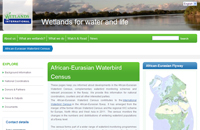
22 February 2012 - Wetlands International
has launched a new website, which is dedicated to the
African-Eurasian
Waterbird Census. The page provides information about developments
in the African-Eurasian Waterbird Census, on complementary
waterbird monitoring schemes and relevant processes in
the flyway. It also contains sections which offer contact
details of national coordinators in the African-Eurasian
flyway and a range of documents and manuals, which are
freely available and should assist national coordinators
in their work.
Bonn,
22 February 2012 - Wetlands International
has launched a new website, which is dedicated to the
African-Eurasian
Waterbird Census. The page provides information about developments
in the African-Eurasian Waterbird Census, on complementary
waterbird monitoring schemes and relevant processes in
the flyway. It also contains sections which offer contact
details of national coordinators in the African-Eurasian
flyway and a range of documents and manuals, which are
freely available and should assist national coordinators
in their work.
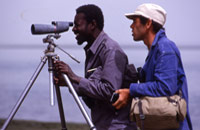
The African-Eurasian Waterbird Census contributes to the International Waterbird Census (IWC) in the African-Eurasian flyway. It resulted from the merger of the former African Waterbird Census and the regional IWC scheme for Europe, North Africa and West Asia in 2011.
The IWC scheme, which is coordinated by Wetlands International, is an annual census of waterbirds in more than 100 countries and takes place in mid-January each year. Close to 15,000 voluntary expert observers will be counting between 30 and 40 million waterbirds using a standardized method involving the collection, checking, and importing of national and regional waterbird census data. This makes it easy to compare the gained data of waterbirds from Africa, Asia and Europe.
 The IWC is a valuable source of information, making it
possible to monitor changes in waterbird numbers and
distribution, to improve knowledge of little-known waterbird
species and wetland sites, and to identify and monitor
sites that qualify as Wetlands of International Importance
under the Ramsar Convention on Wetlands. The census also
provides information on the conservation status of waterbird
species and helps to increase awareness of the importance
of waterbirds and their wetland habitats at local, national
and international level.
The IWC is a valuable source of information, making it
possible to monitor changes in waterbird numbers and
distribution, to improve knowledge of little-known waterbird
species and wetland sites, and to identify and monitor
sites that qualify as Wetlands of International Importance
under the Ramsar Convention on Wetlands. The census also
provides information on the conservation status of waterbird
species and helps to increase awareness of the importance
of waterbirds and their wetland habitats at local, national
and international level.
The data collected through the IWC are indispensable for Multilateral Environmental Agreements such as the Ramsar Convention on Wetlands and AEWA; the IWC data is also the basis for the AEWA Conservation Status Report on Migratory Waterbirds (CSR).
For more information please visit: