
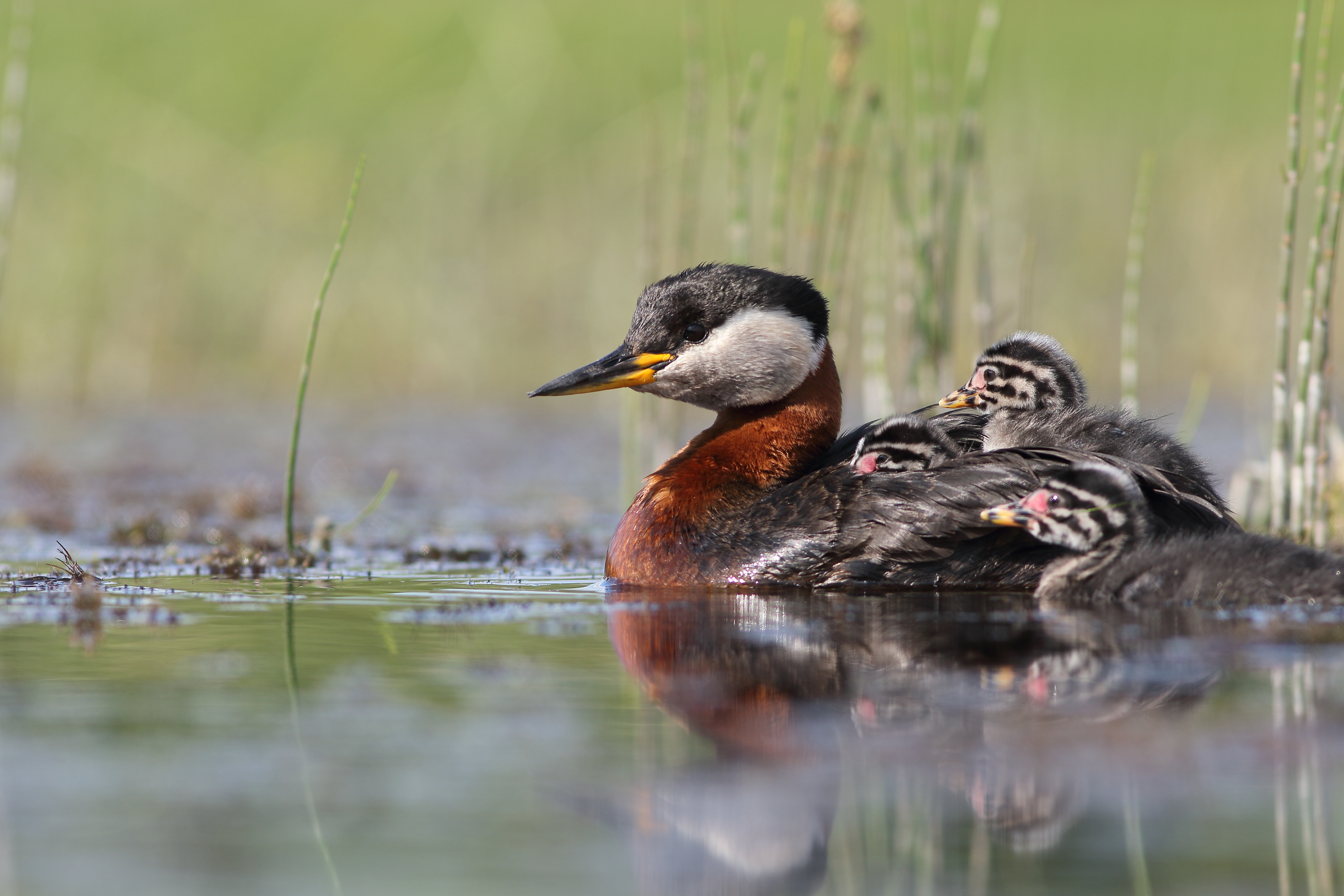
AEWA Technical Committee Launches New Triennium with Ambitious Work Plan and Renewed Leadership
Bonn, 22 May 2026 – From 28 - 30 April, the AEWA Technical Committee (TC) convened online for its first meeting of the 2026–2028 triennium, bringing together over 40 participants to lay the groundwork for implementing the Committee’s triennial Work Plan, which was approved in November 2025 by the 9th Session of the AEWA Meeting of the Parties (MOP9).
In his welcoming address, the newly appointed Acting Executive Secretariat of AEWA, Sergey Dereliev, highlighted the significance of the upcoming three-year period, with a new AEWA Strategic Plan being developed and several accompanying activities aimed at driving transformational change in the Agreement’s functioning and delivery. He underlined the central role of the Technical Committee and that strengthened collaboration with AEWA’s partners and across regions would be crucial in advancing the Agreement’s science-based conservation efforts.
The meeting brought together a wide range of participants representing the Agreement’s diverse network. These included Technical Committee members - comprising regional representatives, thematic experts, and representatives of Wetlands International and CIC - as well as several invited experts, observers from Parties and partner organizations, and members of the Secretariat.
Four new members joined the Committee for the first time following their appointment by MOP9. These included Nikolai Petkov (Bulgaria) for Central Europe, Diego Pavón-Jordán (Spain/Norway) for North and Southwestern Europe, Stella Egbe (Nigeria) for Western Africa and Richard Caddell (United Kingdom) as the newly appointed Expert in Environmental Law. Alongside other current members, observers and invited experts on AEWA’s Technical Committee, they represent regional expertise and thematic specializations essential to the Committee’s work.
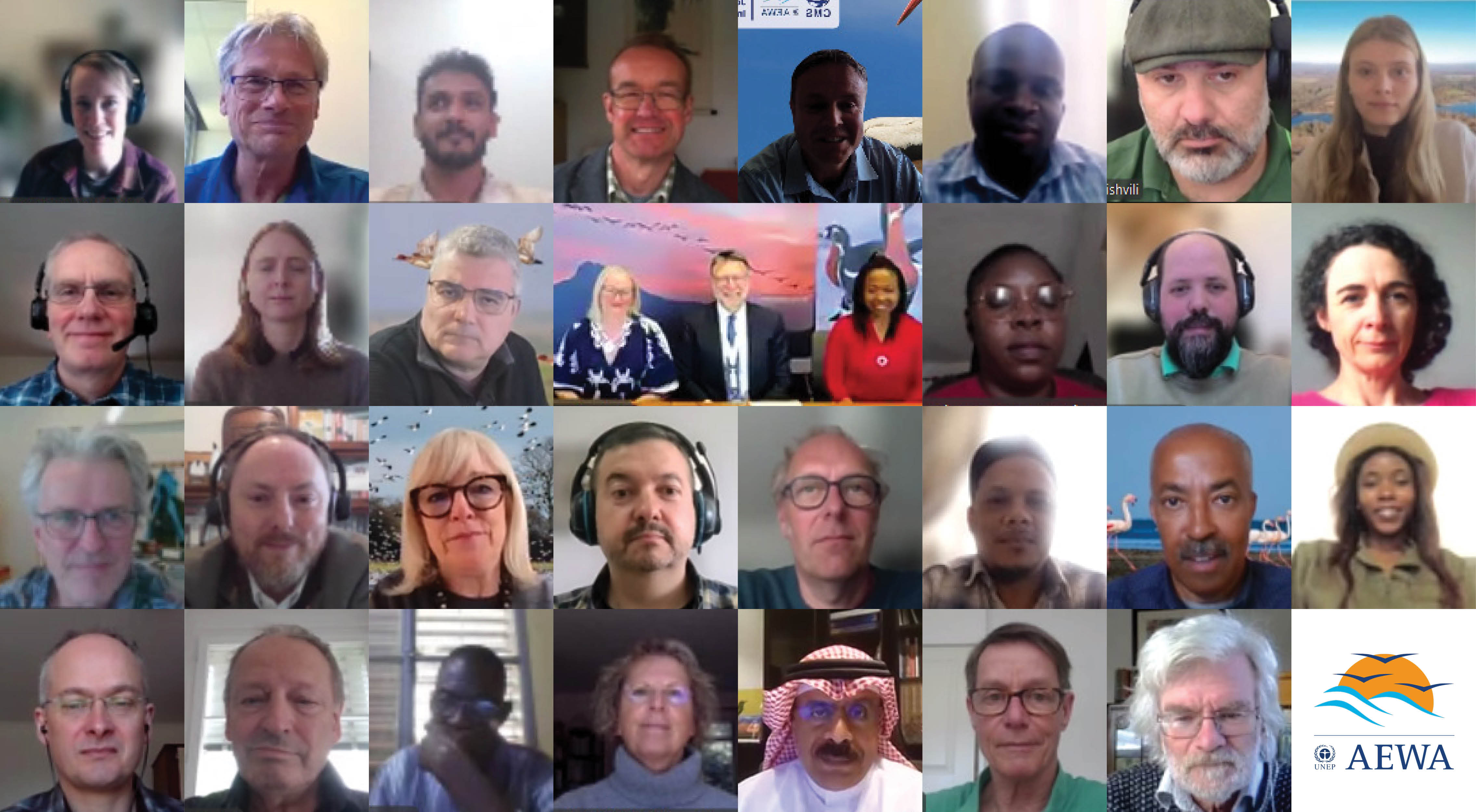
Participants of the 21st Meeting of the AEWA Technical Committee held online from 28 – 30 April 2026.
A key item on the agenda was the election of the Committee’s leadership for the next three years. Members agreed to extend the Chairship of Mohammed Shobrak (Saudi Arabia), the Regional Representative for Southwestern Asia, recognizing his effective guidance during the previous triennium.
“I would like to sincerely thank all the members, experts, and observers from Parties and organizations for their active participation and for their good contributions made over the course of the meeting. We have a lot of work to do, and the newly agreed Work Plan will help guide and focus our work. It will be important for us to maintain this momentum throughout the coming triennium,” said Mohammed Shobrak, Chair of the AEWA Technical Committee.
Nikolai Petkov was elected as the Committee’s Vice Chair. Reflecting on his new role, he emphasized both the importance of cooperation across flyways and the urgency to tackle current and emerging conservation challenges to migratory waterbirds collectively:
“I’m thrilled to step into my new role as the Central European Regional Representative and moreover to be elected as Vice Chair for the AEWA Technical Committee. AEWA has always been a special Agreement because it proves that countries can work together to protect the migratory species that share our flyways. I am eager to work alongside the brilliant experts of the TC and the Secretariat staff to turn our knowledge into real, lasting action on the ground over the next three years,” said Petkov.
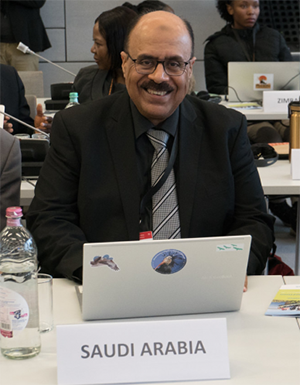 | 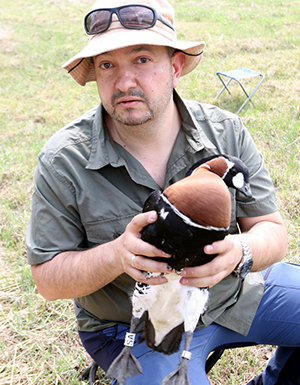 |
| Mohamed Shobrak, Chair of the AEWA Technical Committee. Photo by Aydin Bahramlouian (CC BY-NC 4.0) | Nikolai Petkov, Vice Chair of the AEWA Technical Committee. Photo by Mihail Iliev/BSPB |
Regional Representatives used the meeting to provide updates on the implementation of AEWA in their respective regions. These reports are developed with input from national and technical AEWA focal points and other stakeholders, offering valuable insights into progress made in implementing AEWA, as well as some of the challenges faced within each region. Discussions highlighted regional differences in implementation capacity, as well as shared concerns such as habitat loss, climate change impacts and the need to strengthen waterbird monitoring.
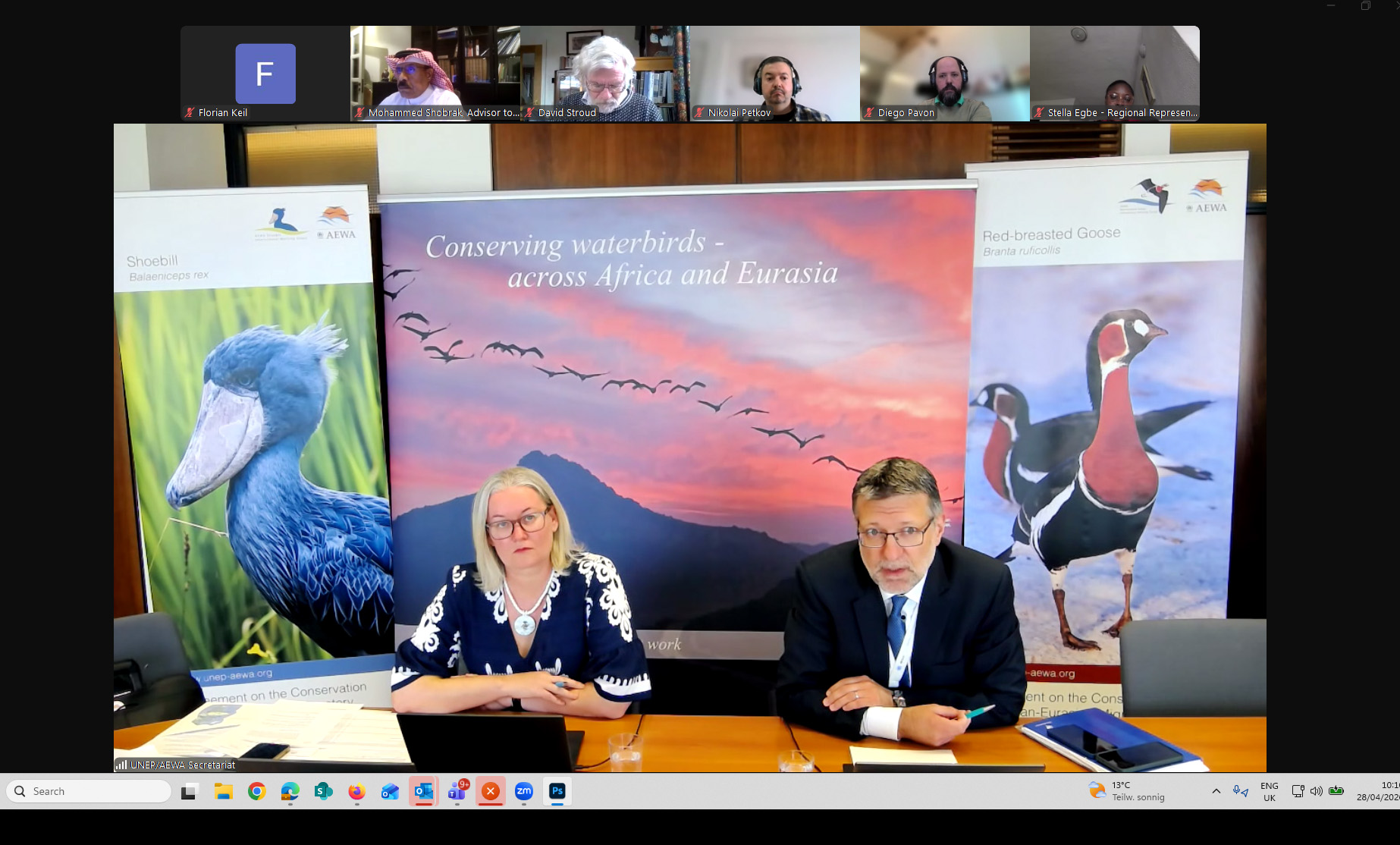
Melissa Lewis, Species Officer at the AEWA Secretariat and Sergey Dereliev, AEWA’s Acting Executive Secretary attending the 21st Meeting of the AEWA Technical Committee.
The Committee explored opportunities to enhance collaboration with other Multilateral Environmental Agreements, most notably the Ramsar Convention on Wetlands, with discussions focused on strengthening interlinkages with the Ramsar Scientific and Technical Review Panel (STRP), which recently established its own Work Plan for 2026–2028. It also reviewed and approved the Terms of Reference for the Communication, Education and Public Awareness (CEPA) Advisory Group to the Technical Committee, marking an important step toward further strengthening the work in this area under the Agreement.
Updates on the AEWA Secretariat’s activities and its new Programme of Work for the Period 2026 – 2028 were also presented, providing context to defining the modalities of implementing the Committee’s Work Plan, while taking into account the Secretariat’s capacity constraints.
A central focus of the meeting was the detailed planning for implementation of the AEWA Technical Committee Work Plan for 2026–2028, which was adopted at MOP9. The Work Plan comprises 55 tasks deriving from AEWA’s legal framework, Strategic Plan and various Resolutions, as well as the need for AEWA representation in other fora, such as the thematic task forces established under the Convention on Migratory Species. Participants reviewed each task in depth, breaking them down into concrete sub-tasks, assigning leads and contributors, and establishing timelines for each of the tasks. They also endeavored to identify which tasks would be reliant on additional resources or would benefit from additional external expertise.
“The outcomes of this meeting mark an important starting point for the Technical Committee’s work in this triennium, carrying great significance for the future of the Agreement. With renewed leadership, fresh expertise, and a clearly defined and ambitious Work Plan, the Committee is well-positioned to deliver on its mandates over the coming three years,” said Dereliev.
The three-day meeting effectively set the roadmap for the Committee’s work until the next Meeting of the Parties (MOP10) in 2028. It will convene again in early 2027 to review progress made in implementing the tasks outlined in the updated Work Plan.
- About the Technical Committee
The AEWA Technical Committee is a subsidiary body of the Agreement, which provides scientific and technical advice to the Meeting of the Parties (MOP) and, through the Secretariat, to Parties. It makes recommendations on the AEWA Action Plan and the implementation of the Agreement and its membership comprises nine experts elected by MOP on a regional basis, representatives appointed by three organizations (IUCN, Wetlands International and the CIC), and thematic experts on the topics of environmental law, game management, and rural. Several permanent observer organizations (BirdLife International, FACE and OMPO) and invited experts also make critical contributions to the Committee’s work. The Committee works closely with the Standing Committee to ensure consistency across the Agreement’s work.
- Further Resources